


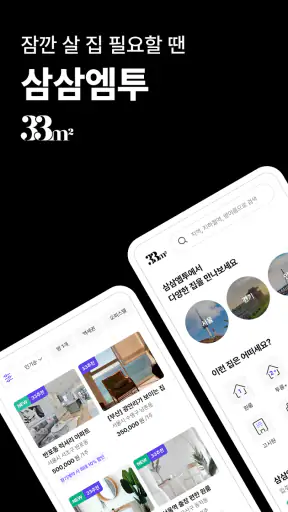
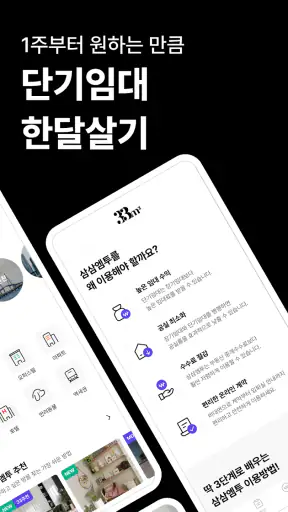
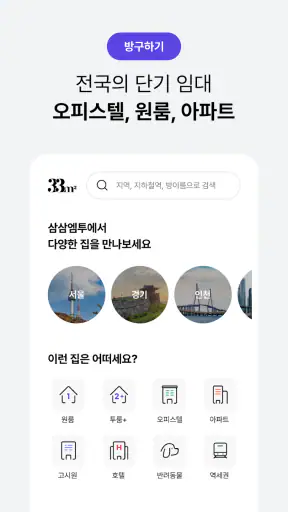
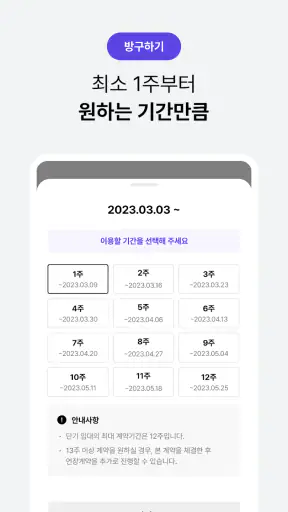
Finding a place to stay in Korea for a short period can be surprisingly difficult. A normal hotel search is convenient, but it may not suit someone who wants a studio, officetel, or apartment with a more residential feel. That is where 33m2 - Korea Short-Term Rental makes sense. It is a free House & Home app from SPACEV focused on people looking for temporary housing in Korea rather than a single night in a standard room.
I see it as a practical starting point for students, visiting workers, relocating couples, and travelers who want to compare home-style options. It is not a universal replacement for hotel platforms or long-term property portals, though. Its value depends heavily on how closely your plans match short-term Korean housing. If that is exactly what you need, the focused approach is useful; if you only want the fastest possible overnight booking, another category of app may feel simpler.
How I decide whether 33m2 is the right housing tool
My first question is always the length and purpose of the stay. Someone spending a weekend in Seoul usually thinks about location, cancellation, check-in, and nightly convenience. Someone staying for several weeks or months has different concerns: whether the room feels livable, whether the neighborhood works for daily routines, and whether the property type matches their expectations. This app is aimed at the second situation.
The store summary specifically points toward studios, officetels, and apartments, so I would approach it as a housing search rather than a conventional hotel search. That distinction matters. A short-term home can be a better fit when you need somewhere to unpack, study, work remotely, or settle into a neighborhood. It can also require more careful checking before you commit, because a residential listing may involve different arrangements from a hotel reservation.
I would also decide how much flexibility I need. If my dates are fixed and I already know the district, a focused rental app can reduce the clutter found in broad travel marketplaces. If I am still choosing between cities, need a wide range of lodging types, or want familiar hotel-service guarantees, I would compare it with general booking apps before making a decision.
The audience it serves best
The strongest match is someone who wants a temporary base in Korea. Imagine arriving for a language course, a work assignment, or a long visit with a suitcase and a schedule that does not fit a hotel routine. In that case, browsing studios and apartments is more relevant than scrolling through tourist rooms designed for short stays.
It may also help a person who is moving between housing arrangements. A temporary apartment can act as a bridge while you learn the local area and search for something more permanent. I would not treat the app as a substitute for inspecting a property or confirming the rental terms, but it can be a useful place to organize the search before contacting a host or making a commitment.
Families and couples should think about space differently from solo travelers. A room that looks adequate for one person may feel restrictive when two people are staying for an extended period. The apartment-oriented focus gives those users a more relevant starting point than a basic room search, although the final choice still depends on the individual listing and its conditions.
What I look for before trusting a listing
When I use a housing app, I do not judge an option by photos alone. I want to understand how the property fits everyday life: the surrounding area, the route to work or school, the amount of storage, and what kind of stay the listing appears designed for. I would save several candidates rather than choosing the first attractive image.
A useful workflow is to divide the search into three passes. First, I remove homes that are in the wrong area or outside my dates. Second, I compare the remaining places by practical details such as layout and suitability for the length of my stay. Third, I contact the relevant party with a short list of specific questions. This prevents a polished listing from distracting me from basic issues that matter after move-in.
One less obvious point is that short-term housing should be judged by the neighborhood at the time of day you will actually use it. A central address may look appealing, but a longer commute can become tiring when repeated every morning. I would map the daily route before deciding, especially if the app presents several districts that are unfamiliar to me.
Where the focused approach wins, and where another app may fit better
Why the housing focus is useful
The biggest advantage is relevance. Instead of treating every kind of accommodation as equal, 33m2 centers the search on temporary homes in Korea. That gives the app a clearer purpose than a broad travel service. If I already know that I want an apartment-style stay, I spend less time filtering out ordinary hotel rooms and other options that do not match my plans.
The emphasis on studios, officetels, and apartments is also helpful for people who are thinking beyond a bed for the night. These property types can make more sense for a longer visit because they are presented as places to live temporarily, not merely places to sleep between sightseeing trips. I appreciate that distinction because it changes the questions I ask and the compromises I am willing to accept.
Another strength is accessibility. The app is free, is rated for Everyone, and supports devices running Android 8.0 or later. That makes it approachable for a broad range of users, including someone using an older Android phone while traveling. The current version is 3.4.80, so I would keep the app updated before beginning a serious search rather than relying on an outdated installation.
Its public reception is encouraging as well. It has a 4.9 average from around eight and a half thousand ratings and has passed one million installs. I do not treat those figures as proof that every listing or every user experience will be perfect, but they do suggest that the app has reached a substantial audience and that many people have found the basic concept worthwhile.
Realistic use during a relocation
Picture a person arriving in Korea for a new job with a temporary contract and no local home yet. They need somewhere more settled than a hotel, but they are not ready to sign a conventional long-term lease from another country. I would use this app to build a shortlist of studios and apartments near the workplace, then compare the neighborhoods and practical requirements before making contact.
The key is to use it as part of a decision process, not as a magic answer. I would keep notes for each candidate, including the address area, dates, property type, and questions that still need answers. That simple habit is especially valuable when several homes look similar on a phone screen. It also makes it easier to notice when a cheaper or more attractive option creates a longer commute or a less suitable living arrangement.
For a student, the same approach works differently. Instead of prioritizing office access, I would check the route to campus, nearby daily necessities, and whether the space seems workable for studying. For a couple, I would focus on layout and privacy. The app’s category focus remains the same, but the right decision criteria change with the reason for the stay.
Where hotel and general booking apps remain stronger
I would choose a conventional hotel app when speed and standardized service matter most. Hotels are often easier for a short arrival, a late check-in, or a trip where I do not want to think about setting up a temporary home. A general booking platform may also be better when I need to compare destinations across several countries or combine flights, hotels, and other travel arrangements in one place.
A broad property portal can be a better fit for someone searching for a permanent home. Long-term renters may need a different kind of market coverage, more formal lease information, or tools designed around buying and leasing rather than temporary accommodation. I would not force a short-term rental app into that role simply because it includes apartments.
There is also a trade-off in specialization. A focused catalog can make the search more relevant, but it may feel limiting if my requirements are unusual. For example, if I need a very specific accessibility arrangement, a large family home, or a property outside the app’s main audience, I would search elsewhere at the same time. The right comparison is not “which app is best?” but “which app covers the kind of stay I am actually planning?”
Questions I would settle before switching from my usual app
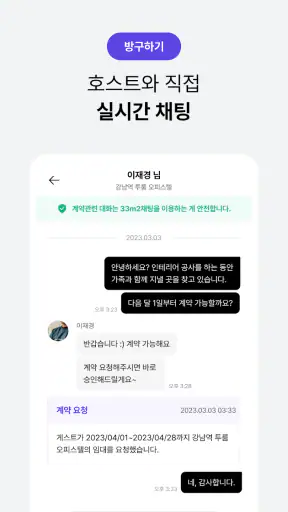
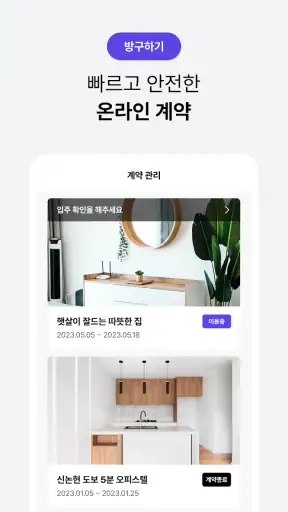
If I normally use hotels, the first question is whether I am ready for a more residential arrangement. I would confirm how the booking or rental process works, what is expected from the guest, and whether the dates are treated as a short visit or a temporary tenancy. The app can help surface suitable homes, but I would still read every available condition carefully.
I would also ask how much support I need after arrival. Hotel guests usually understand where to go for assistance. A temporary apartment may require more direct communication and personal responsibility. If I am arriving late, do not speak Korean comfortably, or have little tolerance for uncertainty, I would value clear pre-arrival communication more than an appealing photo gallery.
Finally, I would compare the total effort, not just the apparent accommodation cost. A home may suit a long stay while taking more time to research than a hotel. That is not automatically a disadvantage, but it is part of the exchange. The app is most useful when the extra search effort leads to a living arrangement that better matches the length and purpose of the trip.
Practical habits that make the search safer and clearer
I recommend creating a short checklist before browsing. Write down the dates, preferred districts, maximum travel time, number of occupants, and the minimum space you need. Without that list, it is easy to become attached to a visually attractive place that fails one of the requirements that mattered most.
Another useful habit is to separate “must have” details from “nice to have” details. A suitable commute and workable dates belong in the first group. A particular view or decorative style belongs in the second. This is especially important for short-term housing because the perfect combination may be rare, and a sensible compromise can be better than delaying the whole search.
I would also keep screenshots or written notes of the listing information that influenced my decision. That gives me a clear reference when comparing several options and helps me ask precise questions. I would never assume that a photograph answers questions about equipment, access, neighborhood noise, or the exact arrangement of the stay.
The app’s Everyone age rating makes it broadly approachable, but that does not remove the need for adult judgment around housing commitments. Younger users should involve a parent, guardian, school, or employer where appropriate. Anyone sending personal information or arranging a stay should verify the communication and terms through the proper channel rather than relying on assumptions made from a listing preview.
The cost of changing from another search method
Switching to 33m2 costs nothing to download because the app is free, but the real cost is time and adjustment. I would need to learn how its search experience presents Korean short-term homes, build a new shortlist, and possibly contact people through a process different from the one I use with hotels. For a one-night trip, that effort may not pay off.
For a stay of several weeks or longer, the calculation changes. Spending more time at the beginning can help me avoid choosing a room that is fine for two nights but uncomfortable for a month. The app’s focused category reduces one kind of wasted effort, while the residential nature of the options may create another: I have to evaluate the home more carefully than I would evaluate a standard hotel room.
I would not delete my usual booking app immediately. I would use both during the comparison stage, especially if my dates are uncertain. The hotel app acts as a fallback for the first few nights, while 33m2 helps me investigate a more suitable temporary base. That two-step approach can be less stressful than trying to make one platform handle every part of the move.
Who should skip it
I would skip this app if my only goal is a quick hotel room for a short city break and I do not want to compare residential options. I would also look elsewhere if I need a permanent lease, a property in a market not covered by the app’s purpose, or a highly specialized accommodation requirement that demands a broader search.
It may not be ideal for someone who expects every part of the stay to feel like a hotel experience. The app’s focus is temporary homes, so users should be comfortable doing more research and thinking about the practical realities of living in a place. That is not a flaw for the intended audience, but it can be the wrong fit for travelers who value maximum simplicity.
On the other hand, I would strongly consider it if I were searching for a studio, officetel, or apartment in Korea for a meaningful stay and wanted a more relevant alternative to a generic travel marketplace. The app becomes more compelling as the stay gets longer and the need for a real temporary base becomes more important.
My recommendation after weighing the trade-offs
My recommendation is positive, with a clear condition: use 33m2 when you are genuinely looking for short-term housing in Korea, not merely any place to sleep. Its free access, broad Android compatibility, and strong user response make it an easy tool to try. More importantly, the focused property types give it a useful role in a search that hotel-first apps do not always handle well.
I would begin by defining my dates and daily route, then use the app to create a small shortlist instead of browsing without a plan. I would compare each option against the same checklist, ask questions before committing, and keep a hotel or other temporary backup if my arrival schedule were uncertain. That workflow turns the app from a simple browsing tool into a practical part of relocation planning.
In my view, the best reason to install it is not the impressive rating alone, but the way its purpose matches a specific problem: finding a temporary Korean home with more residential character than a standard hotel. If that problem is yours, I think it deserves a place in your search. If your needs are broader, shorter, or more service-oriented, keep using the alternatives that are built around those priorities.


